Why Global Law Firm Websites Fail at Scale (and How One AM40 Firm Fixed It)
Short-term fixes may ease the pressure, but they do not address the root problem. Most platforms are built as monoliths, designed for a moment in time rather than for ongoing change.
Published on February 27, 2026
The scale problem (context, not blame)
Juggling multiple offices, jurisdictions and practice areas globally is complex. It is a mammoth task in every respect, and we know it.
We see firm after firm try and fail, time and again. Digital projects, especially global websites, bring a level of complexity that few can claim to have delivered without sleepless nights. Nine times out of 10, it falls to the marketing team to tackle it at a global scale, and it is not just "more content". It is more complexity, more risk and more coordination.
It is not your fault
But how can we say that if we have just said it falls to the marketing team? It has to be someone's fault, right?
Well, this is one of those situations where the intentions were right at the time. What you thought you needed seemed like the answer to your immediate problems. You did what you, and most people, would have seen as the right approach.
But you are three years down the line and you realise those immediate problems were exactly that: immediate. Now you have new, bigger issues that no one could have predicted, or that did not seem like such a big problem at the time.
It is not your fault.
The website you thought was going to be an asset does not feel that way anymore. You hear more and more people saying, "We just work around the website" or "We do not know where to find anything." Worse still, your own team is struggling to get content live.
At this point, you realise the cost of doing nothing is quietly increasing.
And, for the last time, it is not your fault.
We checked, and the ability to look into the future does not exist.
The truth is, firms grow and the landscape shifts. In most cases, these problems show up in well-funded, fully resourced teams. Having the best talent, putting in the most effort, or even having the largest budgets will not fix structural constraints.
Unfortunately, with the way many law firm websites are built today, you are not left with many options.
There are rarely perfect options, but there are practical ones:
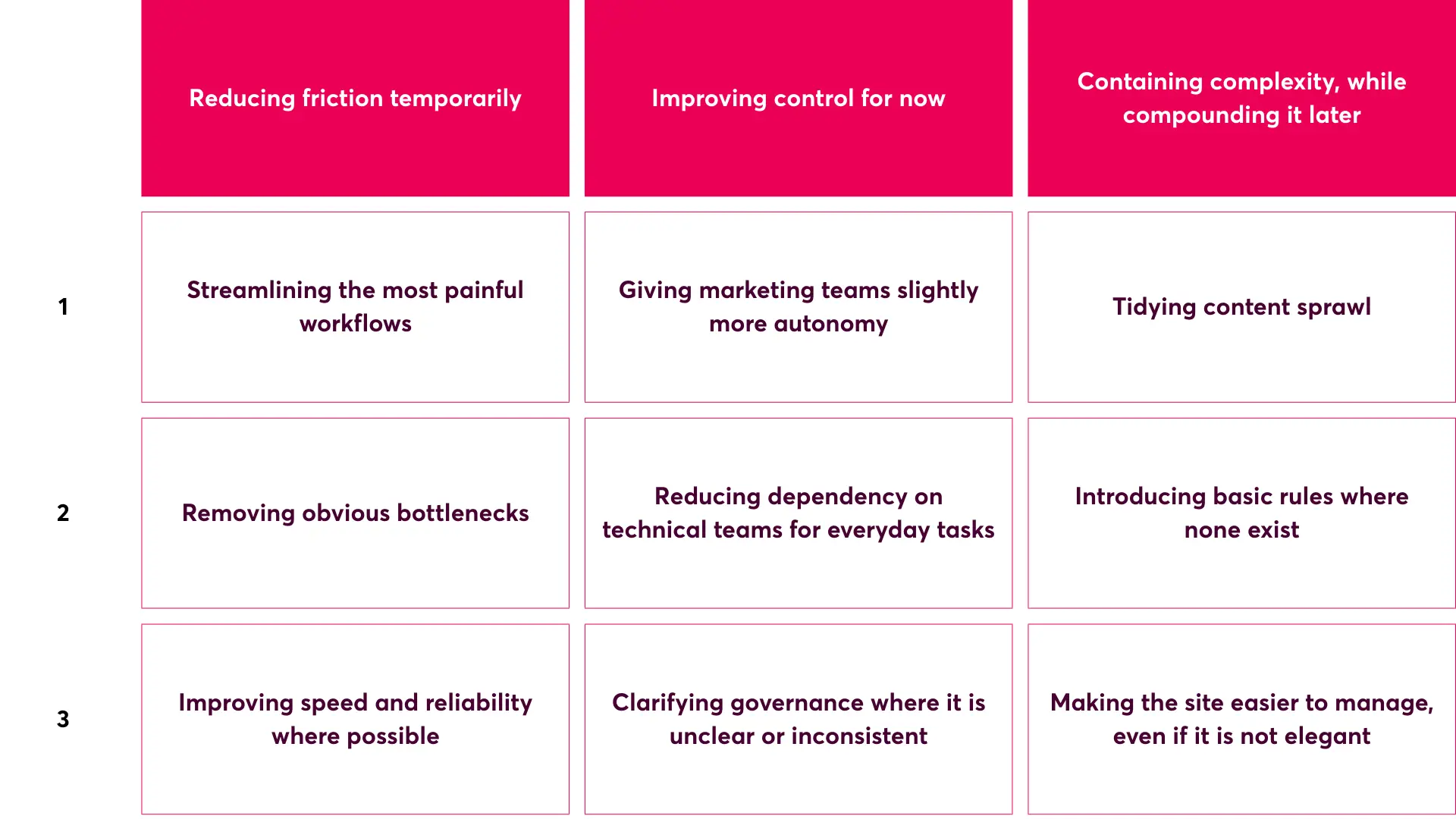
- Patch the existing solution (short term, but it can relieve some pressure)
- Start again (not what you wanted to hear, we know)
Let us start with the patch solution (we usually advise against it)
This is about making the current setup more liveable, not future-proof. It is important to remember that a patch has a shelf life. It only buys you a bit of time. It can help by:
It would be wrong of us not to say this: while patches may alleviate issues in the short term, they will not solve them and can make things worse over the long term.
When does starting again become the right call?
When patches stack up and slow everything down
When governance becomes unmanageable
When future needs cannot be met without compromise
When the website actively limits the marketing strategy
At this point, many firms ask themselves whether the short-term fix is worth the recurring headache it will inevitably create.
Yes, you could take the view of "we will revisit the problem when it shows up again", but it is like a New Year's resolution you make year after year.
Short-term relief for long-term hardship.
In many cases, shifting requirements and obstacles will not stand still. Eventually, depending on what comes first, the cost or the frustration, you will be faced with the only other option: a rebuild.
Fortunately, we have a unique insight into the future if you are willing to look a little further.
While this is an uncomfortable position to be in, it is often the moment when the greatest gains are made.
Why?
At this point, we have the expertise to help you avoid the repetition and the vicious cycle so many firms find themselves in.
The reality is that many websites are built in a monolithic way. That is a fancy term for something designed to stay the same. A website built like this is built for a specific purpose at a specific point in time. That is fine if time and the wider landscape remain frozen. In reality, it is usually outdated within three to five years.
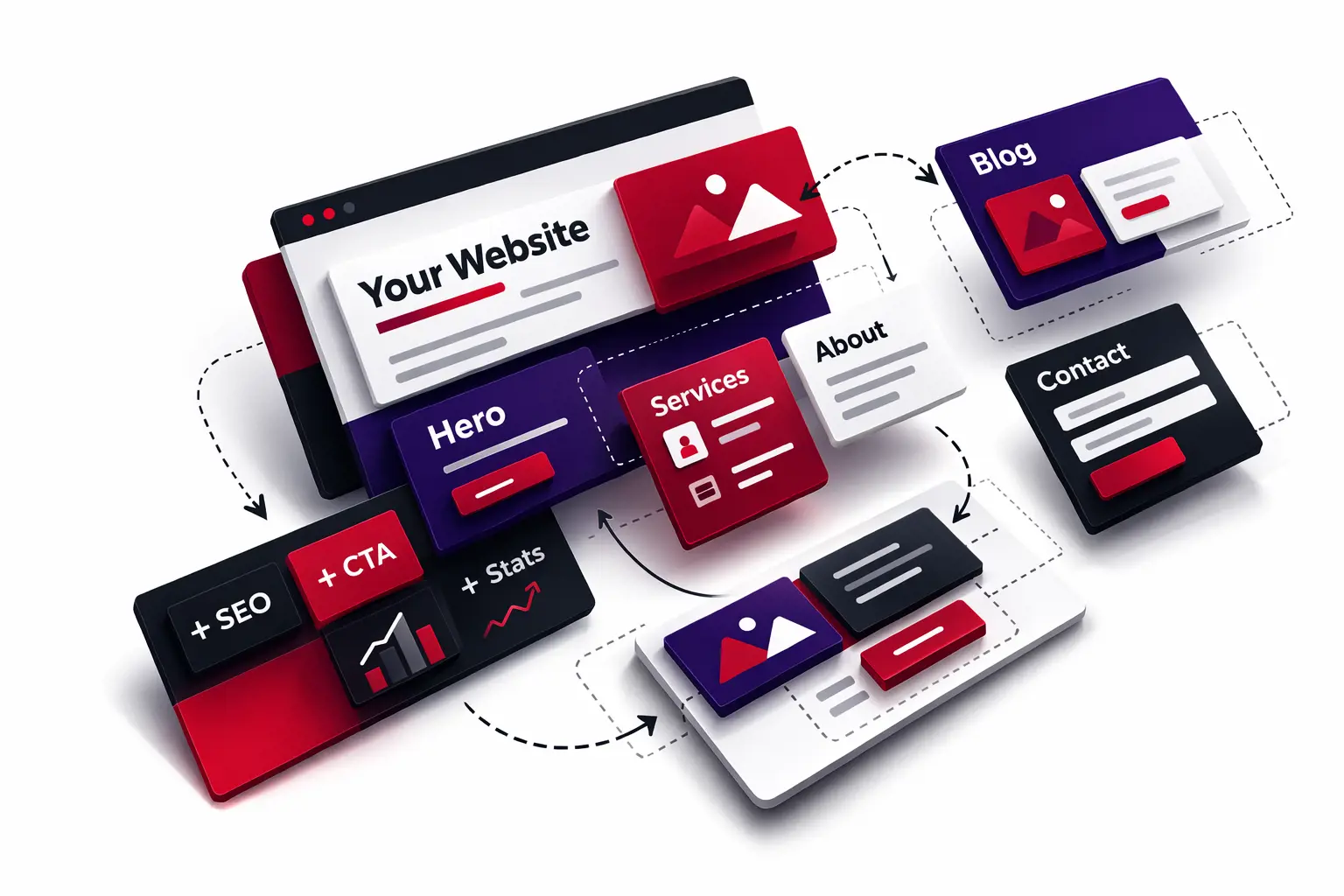
Today, we prefer to build with a composable structure. Yes, another fancy term, but it simply means modular.
Think of a modular sofa. The moment it no longer fits, or you want a change, you lift a section and move it. Suddenly, it can fit any room, any layout and any mood. It may be a simple comparison, but the principle applies to websites too, especially those with high complexity. That is why it suits global law firms so well.
Imagine bringing together the best tools and software to match your requirements and strategy, all connected within one website. And that is not even the best part.
Remember how we said time and landscapes do not stand still? Websites built this way can adapt over time, rather than being rebuilt from scratch every few years.
Our CTO likes a quote often attributed to Darwin: "It is not the strongest of the species that survives, nor the most intelligent that survives. It is the one that is most adaptable to change."
Who knew a concept rooted in evolution would play such a big part in building digital platforms?
Repeating the same build every three to five years starts to feel like the definition of insanity. Some may argue that you do not need a new website every three to five years. It comes down to whether you want to be seen as competitive.
First impressions matter, and many of those first impressions happen through digital platforms such as your website.
2026 is the time for a shift in thinking, and an even bigger shift in how we present ourselves in a digital-first future. We are glad to report that more and more firms are investing in their tomorrow, today.
Most recently, we helped an AM40 global firm achieve exactly this, unlocking the freedom to stay agile in one of the most competitive industries.
If you have not had a chance to look, we suggest heading over to their brand-new website, launched earlier this year, with design support from Living Group.
The question you are probably asking is: how did they break the cycle?
In one simple statement: they set out to rebuild their digital ecosystem as a next-generation platform, reflecting core business priorities and modern B2B buyer expectations.
Matching modern buyer expectations required a modern platform.