Legal marketing has reached a tipping point. The traditional playbook of white papers, blogs, webinars and thought leadership has been overused to the point of saturation. Every firm is producing more content than ever, yet standing out has never been harder.
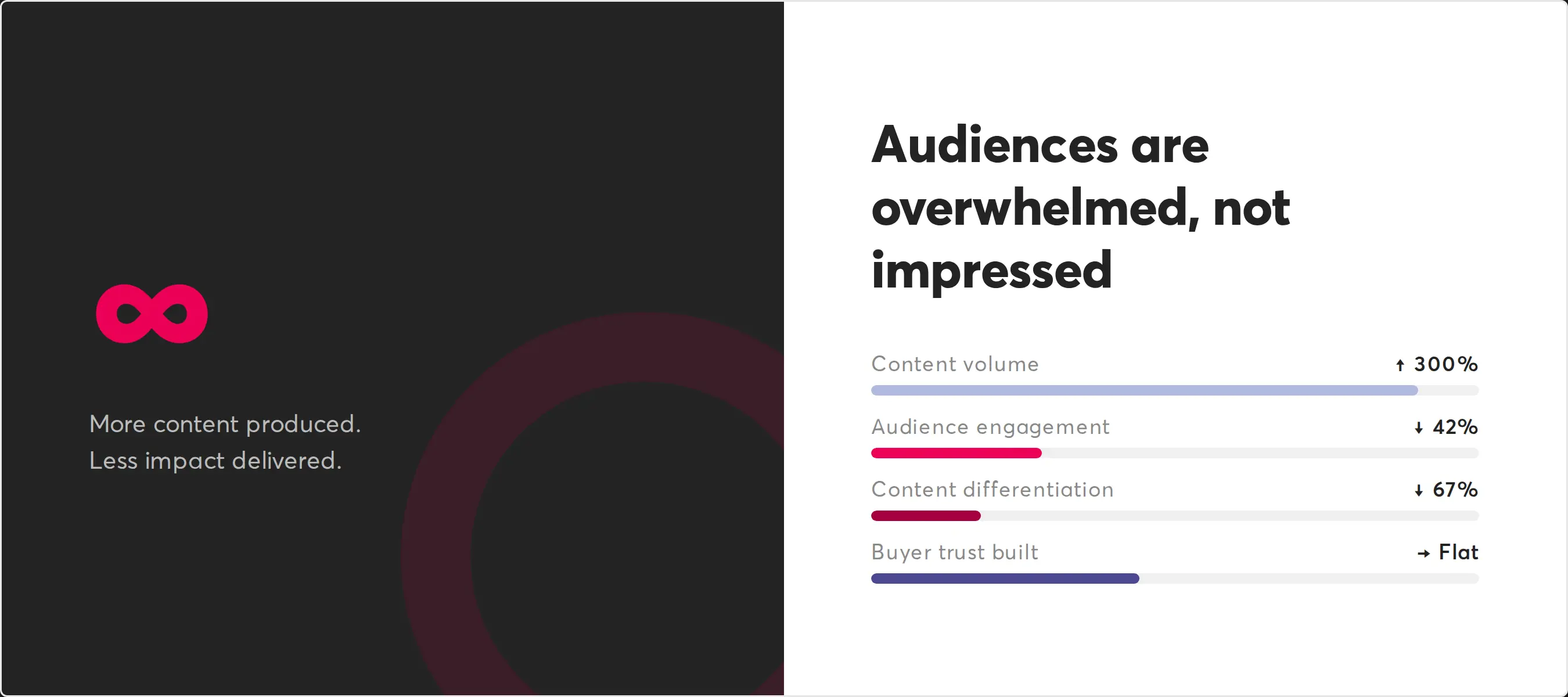
The result? Audiences are fatigued.
Buyers in the legal and professional services space are no longer impressed by volume. They are overwhelmed by it. Content that once signalled expertise now disappears into a sea of sameness, making it harder for firms to differentiate or drive meaningful engagement.
And yet, content still matters.
Quality content is still king, but not in the way it used to be. Today, it must support every stage of the buyer journey, from first interaction to final decision. It is no longer about publishing more. It is about delivering the right message, in the right format, at the right moment.
This is where the paradox emerges.
Creating content has never been easier. AI and modern tools have removed barriers, enabling teams to produce at scale faster than ever before. But creating content that is genuinely useful, credible, on-brand, and capable of building relationships and winning work has never been harder. While AI increases the supply of content, it also reduces differentiation.
More noise. Less impact.
At the same time, buyer behaviour has fundamentally changed.
B2B buyers are digitally fluent and self-directed. They expect value upfront before they ever engage. They research independently, compare experiences and form opinions long before speaking to a firm.
So where does that leave legal marketing teams?
It means moving beyond content for content’s sake. It means focusing on substance over volume. And it means building digital ecosystems, especially websites, that can deliver high-quality, personalised and strategically aligned content at scale.
Because evolution is no longer optional.
It is the difference between being seen and being ignored.
So what is the solution?
If the problem is too much content and not enough impact, the answer is not to produce more. It is to rethink how content is created, structured and delivered.
From volume to value
For years, legal marketing has been driven by output: more blogs, more white papers, more campaigns. But volume alone no longer delivers results.
The shift now is towards value.
Every piece of content needs a clear purpose. It should educate, differentiate, build trust or drive action. If it does none of these things, it is simply adding to the noise your audience is already trying to filter out.

Content as a journey, not an asset
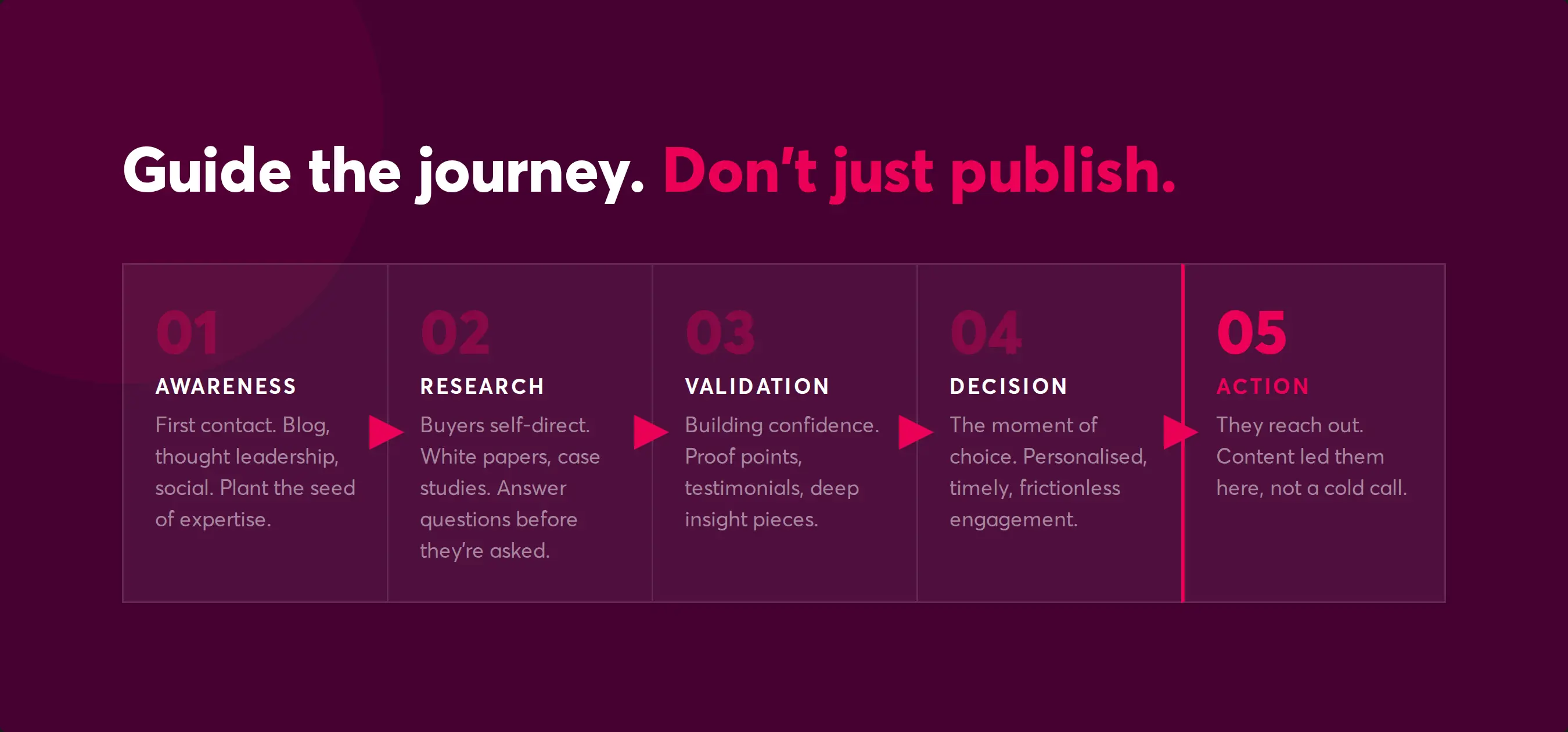
One of the biggest missed opportunities in legal marketing is treating content as a set of standalone pieces. In reality, buyers do not experience content in isolation. They move through a journey, researching, comparing and validating long before they ever engage with a firm.
The role of content is to guide that journey.
That means thinking less about individual assets and more about how everything connects. How does a blog lead to deeper insight? How does that insight build confidence? How does that confidence turn into action?
Using AI the right way
AI has made content creation faster and more accessible than ever. But that is exactly why it is not enough.
When everyone has access to the same tools, the advantage does not come from using AI. It comes from how you use it. The firms that stand out will be those that combine AI efficiency with human expertise, strong opinions and a clear brand voice.
AI can scale production. It cannot replace perspective.
Technology as an enabler, not a constraint
Behind all of this sits a more practical challenge: most law firm websites simply are not built to support modern marketing. Slow, inflexible systems make it difficult to publish quickly, personalise experiences or integrate new tools. They limit what marketing teams can actually achieve. The solution is a more flexible, composable approach, one that gives teams control, enables experimentation and allows content to evolve alongside audience expectations.
The power of a clear point of view
In a saturated market, playing it safe is no longer effective. The firms that cut through are the ones that say something meaningful. They take a stance. They show how they think. Ultimately, buyers are not just choosing legal expertise. They are choosing a perspective they trust.

The bottom line
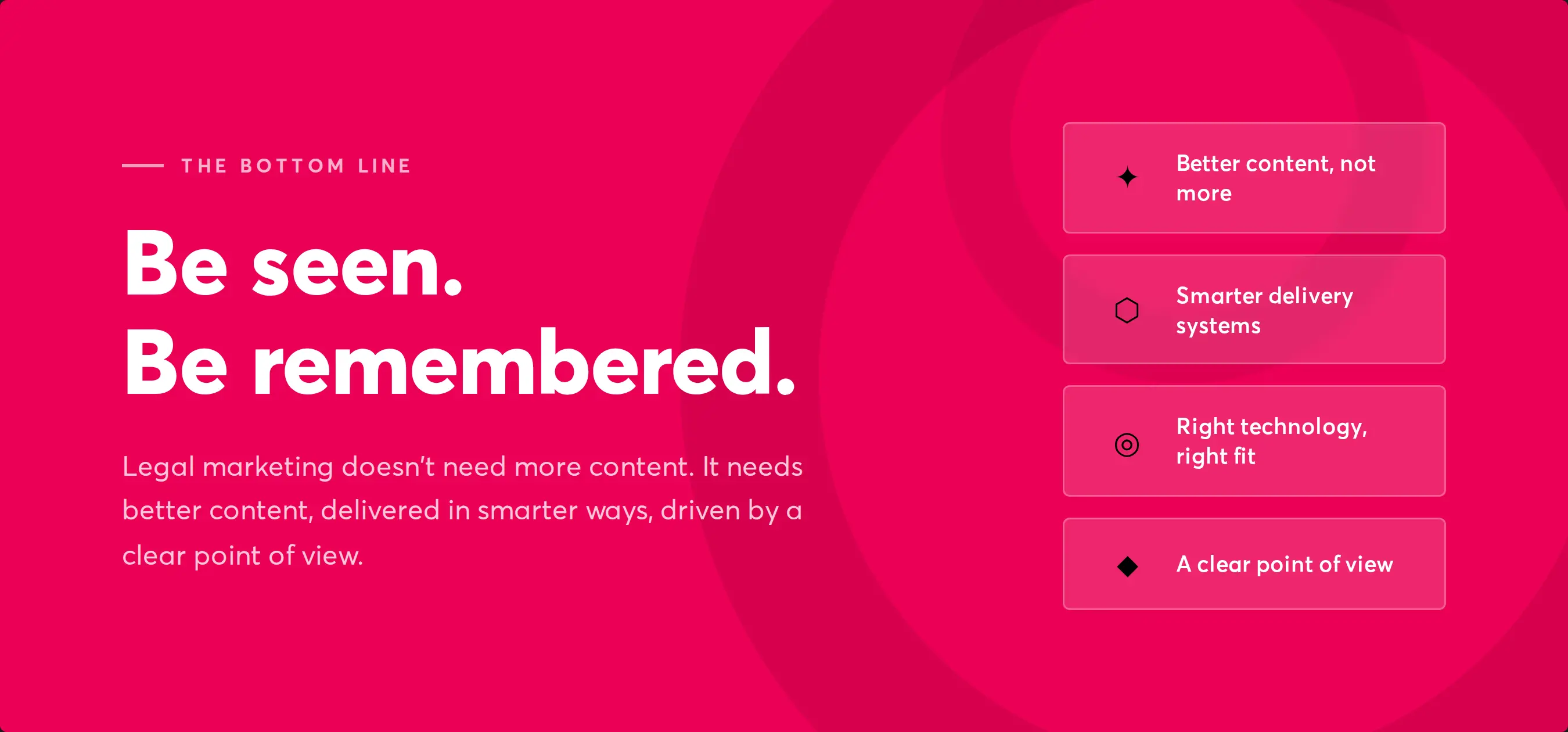
Legal marketing does not need more content.
It needs better content, delivered in smarter ways, supported by the right technology and driven by a clear point of view. Because today, the challenge is not being present. It is being remembered.