


They have slides. Plans. Backlogs. Lists of ideas. But not something that genuinely helps them move forward when things change. And things always change. Markets shift. Priorities move. Technology evolves quickly. What made sense six months ago often does not anymore. So the problem is not capability. It is context. The real question is no longer how to build the perfect roadmap. It is how to build one that still works when nothing stays still.
A roadmap is not a fixed plan
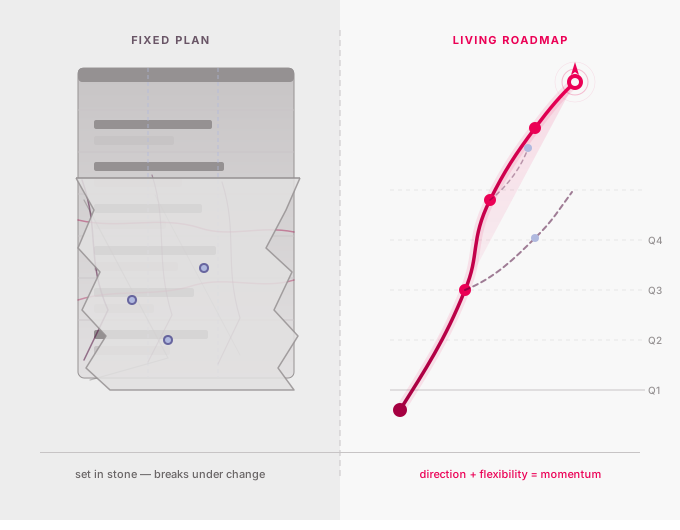
Roadmaps used to be detailed and fixed from the start. That worked when change was slower. Now, that approach breaks down quickly. The companies getting the most value from roadmaps treat them differently, not as something set in stone, but as a way to guide decisions. You still need direction. But you also need the flexibility to adjust without losing momentum. That balance is where many organisations struggle.
Digital should not sit on the side
In many companies, digital is still treated as a separate project. Something that runs alongside the business, not part of it. That creates problems. Ownership becomes unclear. Priorities clash. Work gets fragmented. The companies moving forward more effectively have made a shift. Digital is not something they "do". It is how they operate. It shapes how they sell, how they serve clients and how they grow. At that point, the roadmap becomes a practical tool for making decisions, not just a presentation.
The client journey shows what is really happening
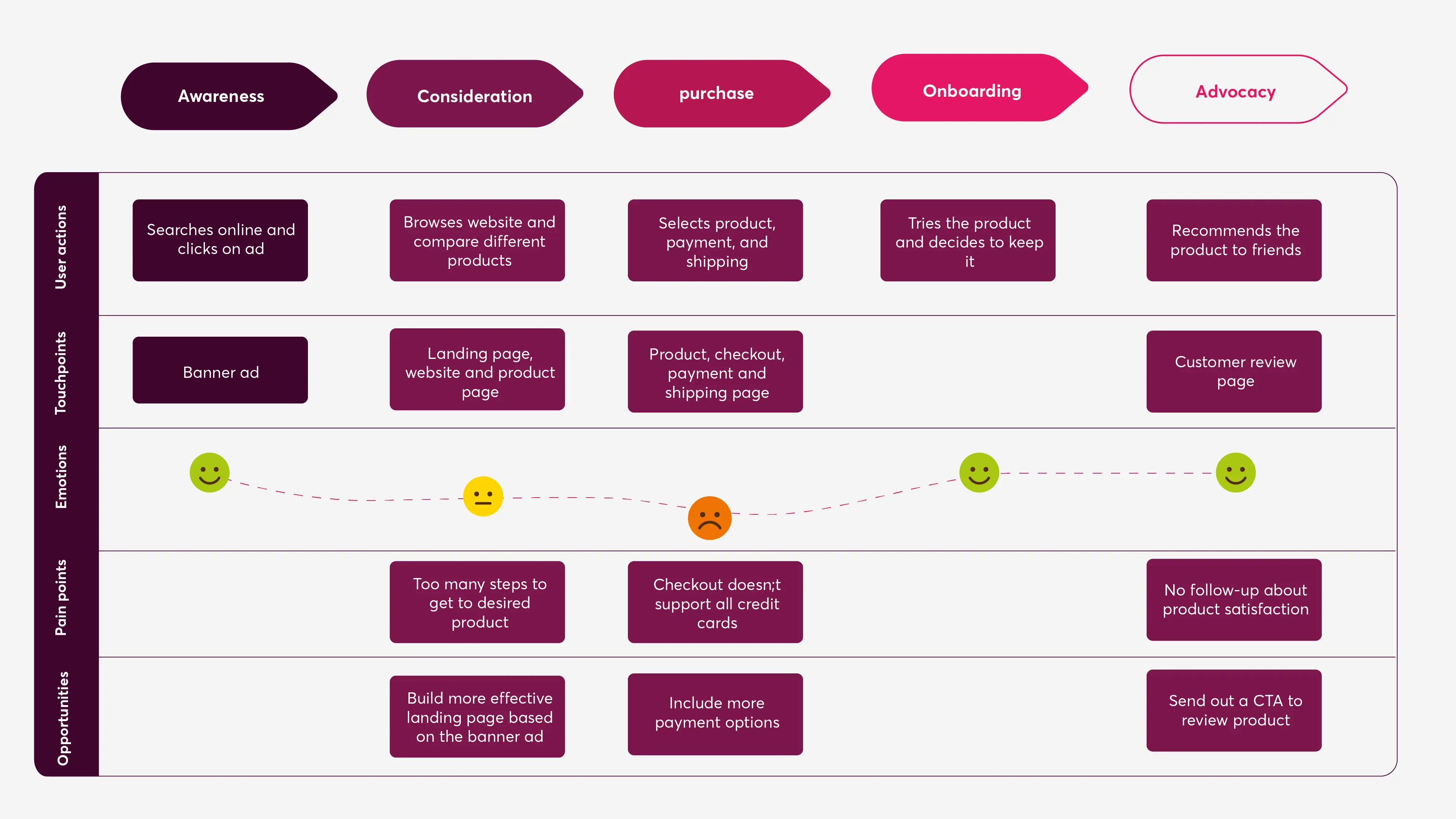
One of the simplest ways to spot issues is to look at the client journey as it is. No explanations. No internal reasoning.
That is when things become clear.
- Strong traffic but low conversion
- Features that exist but are rarely used
- Journeys shaped by internal structure, not client needs
- Friction that has just been accepted over time
This is common. But when you focus on how clients actually behave, priorities become clearer and unnecessary complexity starts to fall away.
More is not always better
Growth used to mean adding more. More channels. More features. More activity. That worked for a while. Now, every addition adds cost and complexity. It becomes harder to see what is actually working. The companies pulling ahead are more deliberate. They are clear on why something exists. And they are willing to remove what no longer adds value. At some point, ambition runs ahead of what your systems can support. You start to see it in small ways. Changes take longer. Dependencies grow. Risk increases. The difference is not about having the latest tools. It is about having a setup that matches how you want to work. Where you need flexibility, you build for it. Where you do not, you keep things simple.
Efficiency starts with simplification
Automation is often seen as the answer. But if the process behind it is unclear, automation just makes things faster, not better. The companies that improve efficiency properly start by simplifying. They look at how work actually happens. They remove unnecessary steps. Then they automate. It is less flashy, but it works. Data now drives daily decisions and is no longer just for reporting. It shapes everyday decisions: how you serve clients, how fast you can act and how you measure success. If your data is weak, it shows. Decisions slow down. Experiences become inconsistent. Opportunities are missed. When it works well, it is almost invisible. But it changes how quickly you can move. At some point, every roadmap forces trade-offs. What to prioritise. What to delay. What to stop. This is where things often stall. Not because the answers are unclear, but because people are not aligned. The companies that keep moving revisit decisions often. They stay close to the work. They adjust when needed. It is not about perfect agreement. It is about staying aligned enough to keep going.
Direction matters, but so does flexibility
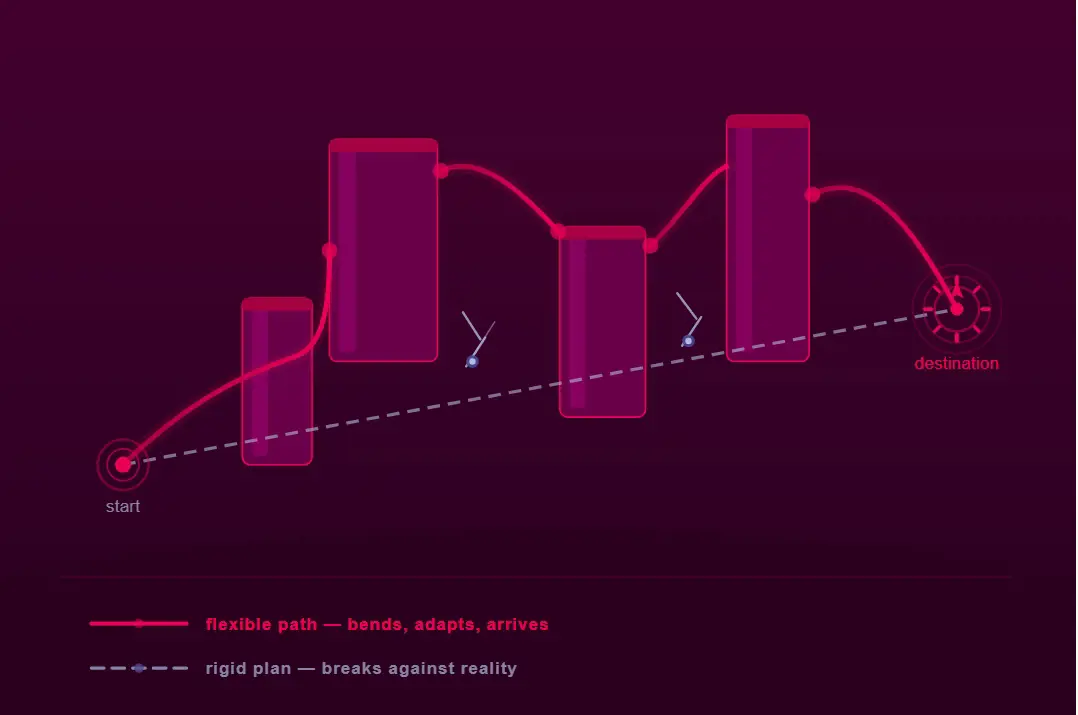
There is always a tension between long-term plans and short-term reality. Focus too much on the long term, and you become rigid. Focus too much on the short term, and you lose direction. The best organisations manage both. They know where they are heading, but they are flexible in how they get there.
Five practical steps marketing teams can take now
Reading a roadmap is one thing. Acting on it is another. Here are five concrete moves marketing teams can make this quarter:
- Map the real client journey, not the assumed one. Pull actual analytics on where prospects drop off, which touchpoints get skipped, and which "obvious" paths clients never take. Use that data (not internal opinion) to decide what to fix first.
- Run a quarterly feature and channel audit. List every channel, campaign type, and website feature currently live. For each one, ask: who is using this, and what would we lose if we stopped? Retire or pause anything that cannot be justified with usage data.
- Simplify the workflow before automating it. Before adding a new marketing automation tool, map the manual process it will replace. Strip out redundant approval steps and duplicate handoffs first. Automating a messy process just makes the mess move faster.
- Put a recurring roadmap review on the calendar. Set a fixed cadence (monthly or every six weeks) to revisit priorities with stakeholders, rather than treating the roadmap as a document written once and filed away. Small, frequent adjustments beat one big annual rewrite.
- Assign clear ownership for "digital" work. Make sure every roadmap item has one named owner responsible for the decision, not a shared or ambiguous owner across marketing and IT. Unclear ownership is one of the most common reasons roadmap items stall.
What to do next
A roadmap is not about certainty. It is about being able to move forward, even when things change. The companies that succeed are not the ones with the most detailed plans. They are the ones that can adapt without losing direction.
That is what really makes the difference. If your roadmap feels more like a set of slides than something you actually use, it is probably time to rethink it. We can help you turn it into something practical. Something your team can use to make better decisions and move faster.