At Novicell, we believe the answer is composable architecture: a flexible, modular approach where tools integrate seamlessly, and marketers move at the speed of strategy, not software. But with so many tools available, where do you begin?
Here are the five essential tools we recommend for building a composable website that supports your team and future-proofs your digital presence.
What is Composable Architecture—And Why Should Marketers Care
Traditional websites are often monolithic, where backend and frontend systems are tightly coupled. Updating a landing page might mean waiting on developers, risking downtime, or compromising on design.
Composable architecture flips that model. Built on the MACH principles (Microservices, API-first, Cloud-native, Headless), this modern approach allows you to plug in best-of-breed tools like LEGO blocks. Each component is independent yet seamlessly connected—meaning faster deployment, easier experimentation, and fewer headaches.
Why it matters:
- Speed to Market – Launch pages and campaigns in days, not months.
- Global Consistency with Local Flexibility – Deliver tailored content per market without breaking brand alignment.
- Future-Proofing – Swap out outdated tools without a full platform overhaul.
The 5 Must-Have Tools for Your Composable Website
To build a composable website that’s agile, scalable, and marketing-friendly, you’ll need these five core building blocks:
- Headless CMS: it lets you create, manage, and distribute content across any device or platform with ease.
- API management: APIs are the connectors that bring your tech stack together.
- Design system: From typography to buttons, a well-defined design system helps maintain brand coherence across all pages, platforms, and devices.
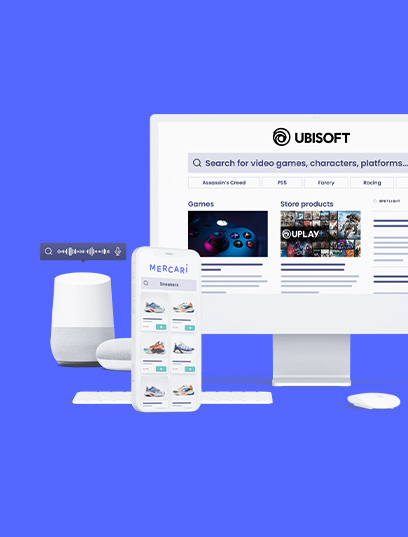
- Advanced search: Whether it’s a product, blog post, or service, an intelligent search system filters and prioritises content based on user intent.
- Digital asset management (DAM): it keeps everything organised and easy to find.
Headless CMS
Traditional CMSs are like walled gardens—your content is confined within predefined templates. We highly recommend that our client transition to a headless CMS, where content is created once and delivered anywhere via API, including websites, apps, digital displays, and even voice assistants.
Why it matters for composability:
In a composable setup, content is decoupled from presentation. That separation allows you to update content in one place and deliver it across channels—from your website and mobile app to digital signage. This is the cornerstone of omnichannel marketing. Composable logic: Content becomes reusable, scalable, and channel-agnostic, making it easy to deliver personalised experiences across devices.
Why marketers love it:
- Omnichannel content delivery
- Custom content modeling
- Independence from dev teams
- Continuous deployment without disruption
🔧 Tool to try: Umbraco
Umbraco strikes a balance between developer flexibility and an intuitive editor for marketers. It supports GraphQL, has content versioning, webhooks, and granular permissions, making it perfect for teams transitioning to a composable setup.
💬 Real-world win: One of our law firm clients slashed their content update time from two weeks to two hours—managing product launches across channels without touching a single line of code.

API (Application Programming Interface) Management
In a composable ecosystem, APIs serve as the glue that connects your CMS, CRM, DAM, and other systems. But unmanaged APIs can turn into security risks or data silos. Ask yourself: How much time does your dev team spend moving data versus delivering value?
Why it matters for composability:
APIs power composable architecture. Each service (CMS, DAM, CRM, etc.) is its microservice—APIs are what glue them together. Without proper API management, your stack becomes fragile and opaque. Composable logic: You gain control, visibility, and reliability over every interaction in your stack—ensuring stability even as you add or swap out tools.
What you need:
- API gateways for traffic control and data formatting
- Monitoring tools for performance and analytics
- Developer portals for smooth collaboration
- Lifecycle management to version, test, and sunset APIs
🔧 Tool to try: Enterspeed
Enterspeed is purpose-built to accelerate content delivery. It optimises and pre-processes API data, caches it globally, and transforms complex backends into frontend-ready formats—perfect for marketers focused on performance.

Design System
As your team grows, maintaining consistency becomes increasingly challenging. Without a design system, your website begins to feel like it was built by different companies.
A great design system includes:
- Reusable UI components
- Design tokens (colors, spacing, typography)
- Interaction patterns
- Clear documentation and accessibility standards
Why it matters for composability:
Without a unified design system, a modular architecture can become visually chaotic. Design systems serve as the frontend counterpart to your composable backend, ensuring a consistent user experience across all micro frontends and digital experiences. Composable logic: Design systems make frontends modular and reusable, mirroring the backend’s microservice logic—and significantly reducing time-to-market.
Method to follow: Atomic Design
This modular approach breaks your UI into:
- Atoms (buttons, icons)
- Molecules (forms, cards)
- Organisms (navbars, product listings)
- Templates and Pages built from the above
Marketing benefit: Build new campaigns faster with pre-approved components—no need to reinvent the wheel.

Advanced Search
A robust search function turns passive visitors into active users. If users can’t find what they’re looking for in seconds, they’ll leave.
What advanced search offers:
- Filtering and faceted search to narrow results
- Natural language processing (NLP) for conversational queries
- Full-text indexing across all content types
- Real-time suggestions and typo tolerance
Why it matters for composability:
In a modular architecture, your content resides in multiple systems, including CMS, DAM, and product databases. Without a unified search experience, users hit dead ends, and content becomes invisible. Composable logic: Search becomes decoupled yet unified, bridging multiple content silos to deliver seamless discovery across your ecosystem.
Tool to try: Algolia
Algolia is lightning-fast and API-friendly. It powers searches for some of the world’s biggest brands and includes analytics to continuously refine the experience.
Marketing impact: Make products, blogs, and services more discoverable—boosting conversions and engagement.
DAM (Digital Asset Management) System
Managing images, videos, and graphics across platforms can quickly become chaotic. A DAM system acts as a central hub for all your digital assets—keeping everything organised, tagged, and accessible.
Key capabilities:
- Centralised asset library
- Global CDN delivery
- On-the-fly optimisation and transformations
- Seamless integrations with CMSs and campaign tools
Why it matters for composability:
Your brand visuals—images, videos, documents—shouldn’t be stored randomly across devices and folders. In a composable stack, the DAM acts as the central asset service, integrated with your CMS, email platform, and design tools. Composable logic: Media becomes programmatically accessible and version-controlled, ensuring performance, governance, and brand consistency.
Tool to try: Cloudinary
Cloudinary integrates directly into tools like Umbraco, allowing marketers to search, crop, watermark, or overlay text—without leaving the CMS. Whether you’re localising a landing page or launching a video campaign, it’s all at your fingertips.

The Power of Composable Architecture
Composable architecture is a strategic enabler for modern marketing teams. With the right tools in place, your digital experience becomes:
- More flexible
- Faster to market
- Resilient to change
By combining Umbraco, Enterspeed, Atomic Design principles, Algolia, and Cloudinary, your brand can deliver richer, faster, and more personalised experiences—without the legacy lag.
Ready to build your composable future?
At Novicell UK, we help businesses craft digital ecosystems designed for growth. Reach out today to discover how composable architecture can transform your website—and your marketing outcomes.